Youth
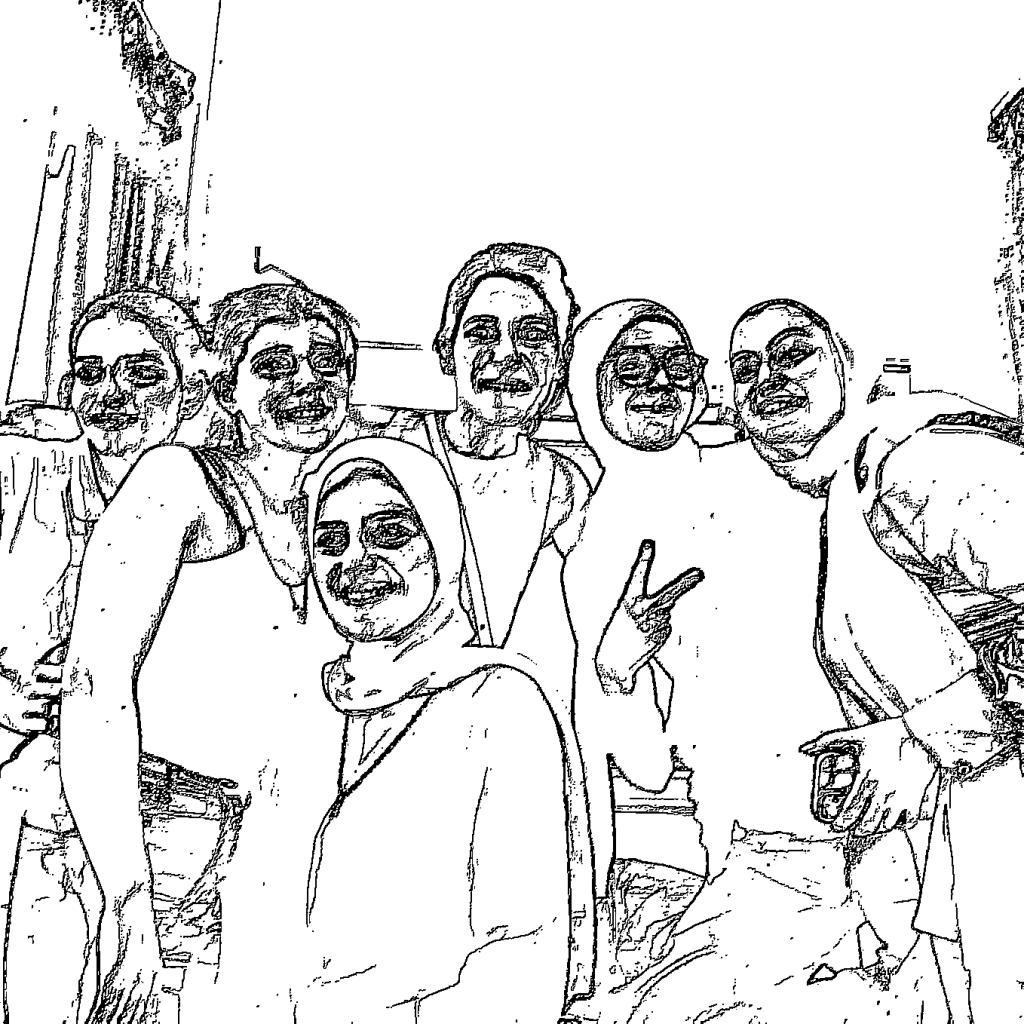
This photo was taken at the Italian Hospital in Amman, following the arrival of the first group of students evacuated from Gaza due to a scholarship program in Italy. It was a deeply emotional moment, marked by grief for all that had been left behind, and at the same time by hope for the new lives they were about to begin abroad.
The girl were laughing and happy to be out, but had to leave Gaza without any memory, no clothes, no bags, only carry what they were wearing on that night. They felt lost, dirty and rited. We use to meet them there, in Amman, to welcome them, hug them, we bring some clean cloths and a minimum hygienic kit.
When a helicopter passed by, the room suddenly fell silent, and all of them began to cry, remembering the dangerous flying objects that constantly cross the sky over Gaza.
Scholarships
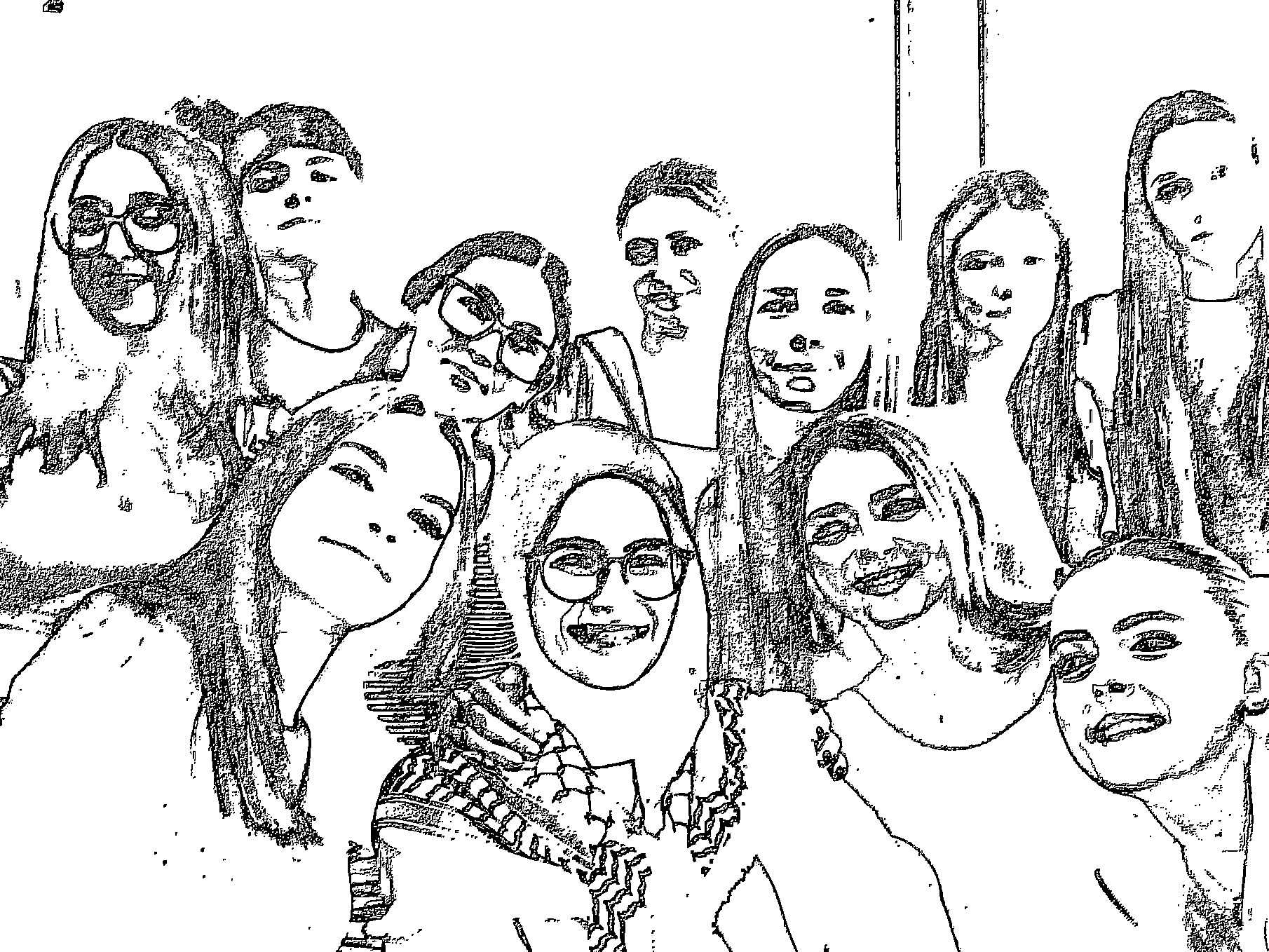
Scholarships are a central pillar of ioien’s work. For young refugees, access to education is not only a right but a form of protection: it creates legal pathways out of war zones, restores continuity after displacement, and offers the possibility of rebuilding a future grounded in dignity and knowledge.
ioien supports students affected by conflict by identifying educational opportunities, facilitating scholarships, and accompanying each student through the entire process—from evacuation and arrival to enrollment, legal regularization, and integration. This includes coordination with universities, schools, public institutions, and scholarship programs, as well as assistance with visas, residence permits, healthcare access, and family-related procedures when needed.
Our approach goes beyond financial support. Scholarships are embedded in a broader framework of care that recognizes the psychological, social, and practical challenges faced by students who have survived war and displacement. ioien works to ensure academic continuity, access to language training, psychological support, and stable living conditions, so that students can truly benefit from their studies.
By investing in education, ioien helps transform emergency responses into long-term solutions. Each scholarship is not only an opportunity for an individual student, but also a step toward preserving knowledge, skills, and cultural continuity in communities whose futures are under threat.
Education, for us, is not charity. It is a durable pathway to protection, autonomy, and belonging.
Medical evacuations
Our goal is to provide these young patients with the best possible chance for treatment and improved quality of life. We appreciate any assistance and support that can be offered during this critical time. The aim is to find sponsors, even in the pharmaceutical field, to sustain the costs of the treatment.
Cases followed until now
Assistance and welcome to evacuated
provided new light last model electrical wheel chair for a child who was target in Gaza and is now paraplegic
Assistance in the hospitals for rehabilitation
Requests to Italy of the evacuation of patients, via Eilat airport, Rafah crossing once open and Amman
Voices that Inspire
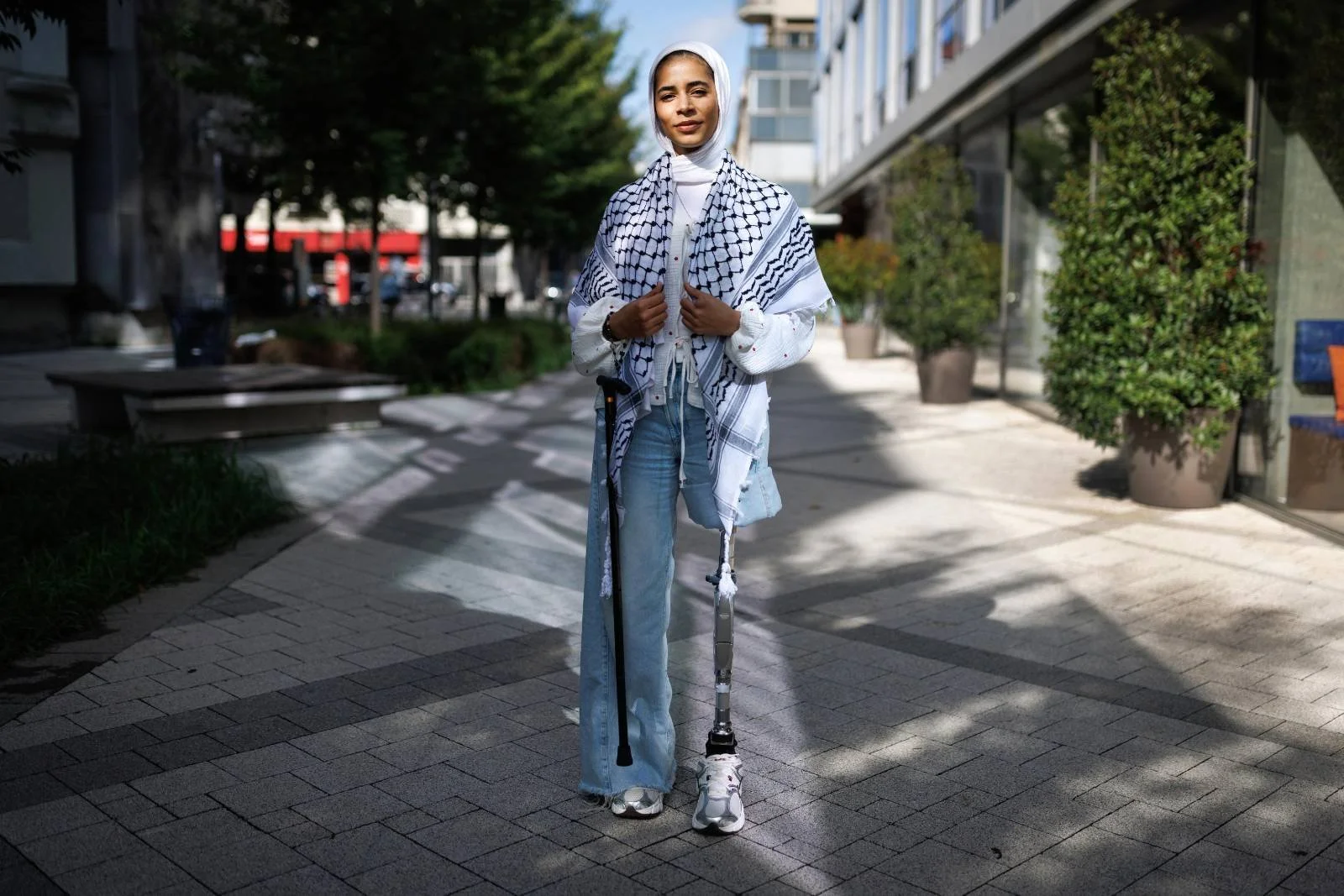
— Amna Naji
I used to have the habit of sitting with one leg crossed over the other. Even now, very often, I still cannot break this habit: I lift my leg, only for it to quickly fall back into the reality that I have lost the other one.
I also have the habit of making the victory sign when someone takes a photo of me, or of counting on my fingers, forgetting that the number of fingers on my hand is no longer five.
In truth, what I have lost is not only my fingers and my foot. I have lost things I truly loved, dreams I wanted to fulfill, and feelings that are difficult to recover.
I constantly tell myself that, despite my severe injury, I am still far better off than many others; that this is a trust God gave me and then took back; that there is goodness in it for me; that it has gone ahead of me to Paradise; and that God’s compensation is more beautiful.
I truly believe all of this. I feel God’s surrounding kindness, and I am content with the portion of this world that has been given to me.
But because emotion does not yield to rationality, no matter how many times I try, I sometimes cry in secret, out of longing and sorrow for my loss.
Tales from Our Scholarship Students
Amna
Amna was twenty-one when a missile found her.
It was not a battlefield. It was not a front line. It was an ordinary moment in a life already narrowed by war. The missile did not ask who she was, what she loved, or what she was dreaming of. It only decided what it would take.
It took her leg.
It took two fingers.
It left burns across her body that still speak when the skin remembers.
Amna survived.
Survival, however, is not a clean word. It does not arrive with clarity or relief. It arrives heavy, full of guilt, pain, and unanswered questions. Why her. Why not the others. Why now.
When Amna reached Europe, she carried more than wounds. She carried her family inside her. Her parents, still trapped. Her younger sisters, Sara and Farah, still in Gaza. Their fear was louder than her own pain.
She did not ask first for herself. She asked for them.
She learned to walk again on a prosthesis while thinking of the sisters she could not protect. She learned hospital corridors, medical words, and the patience of rehabilitation while negotiating evacuation lists, documents, permissions. Her body was rebuilding itself while her heart remained in Gaza.
Amna does not speak often about the moment of the strike. She speaks instead about responsibility. About how being the first to leave meant becoming the bridge for the others. About how surviving created an obligation: to hold space, to insist, to not give up.
Her sisters eventually followed. Not because the world became safer, but because persistence sometimes forces cracks in walls that appear immovable. Amna watched them arrive thinner, older than their years, carrying grief that no suitcase could contain.
She did not become strong because she wanted to. She became strong because there was no alternative.
Today, Amna lives with a body that will never return to what it was. But her presence fills rooms with a quiet authority. She knows what fragility costs. She knows what dignity requires. She knows that independence is not the absence of help, but the right to receive it without humiliation.
Amna’s story is not about heroism. It is about continuity. About refusing disappearance. About insisting that a life interrupted by violence still deserves education, care, love, and a future.She walks differently now.
But she walks forward.
And she never walks alone.
Tawfiq
Tawfiq has lived his entire life in a body that demands negotiation.
Polio arrived early, before he could choose anything for himself. It shaped his legs, his balance, his way of moving through space. From the beginning, he learned that effort would always cost more, that independence would never be effortless, and that dignity would have to be defended daily, often silently.
In Gaza, disability does not pause life—it complicates it. Streets are not built for wheels or crutches. Power cuts interrupt medical devices. Borders turn routine care into an impossibility. Tawfiq adapted not because conditions were kind, but because stopping was not an option.
He learned to calculate every movement. To preserve strength. To avoid falls. To manage pain without complaint. He learned patience not as a virtue, but as a survival skill.
As years passed, his mobility declined. What had once been difficult became dangerous. Joints stiffened, muscles weakened, balance faltered. The body began to close in on itself. Without continuous neurological and orthopedic care, without rehabilitation, without assistive support, loss of function accelerated.
Tawfiq did not ask for miracles. He asked for continuity of care. For the chance to be followed by doctors. For access to rehabilitation. For the possibility of not losing what little autonomy remained.
War made everything worse.
Hospitals became unreachable. Medical follow-up disappeared. Family support became fragmented. Every day required more effort than the day before. What should have been manageable became precarious.
When Tawfiq finally reached Europe, he arrived with a body already exhausted by years of compensation. He needed immediate medical attention, not in theory, but in practice: neurological monitoring, orthopedic assessment, rehabilitation, assistance in daily life. Most of all, he needed stability—legal, medical, human.
Without residency, there is no care. Without care, mobility disappears. Without mobility, isolation follows.
Tawfiq knows this. He feels it in his body.
He also knows that disability does not mean absence of will. He remains attentive, precise, quietly ironic. He does not dramatize his condition. He names it. He asks for what is necessary. He understands that dignity is not independence at all costs, but the right to be supported without shame.
Family matters to Tawfiq not as comfort alone, but as structure. Care is not abstract when you cannot stand alone. Presence is not symbolic when you need help to move, to rest, to heal.
Tawfiq’s story is not about tragedy.
It is about endurance under constraint.
About a body that has carried more than it should have had to.
About the right to care as a condition for dignity.
He is not asking for special treatment.
He is asking for what allows a life to continue.
And continuation, for Tawfiq, is everything.
Sara and Farah
Farah and Sara grew up knowing that life could be taken away at any moment, but also believing—because their parents insisted on it—that life still had to be lived with care, study, and dignity.
When the war intensified, childhood ended abruptly. Days were measured by explosions, nights by the fear that morning might not come. They learned early how to listen for danger, how to read silence, how to grieve without funerals. Cousins, friends, neighbors—names became absences.
Then Amna was hit.
The news arrived like a fracture in time. Their sister was alive, but changed forever. Relief and terror occupied the same space. From that moment on, Farah became older than her years. At nineteen, she stepped into a role she never asked for: protector, anchor, translator of pain.
Sara, still a minor, carried the war differently. Her body held it quietly—through anxiety, through sleeplessness, through a vigilance that never fully relaxed. She learned to be small, to not ask too much, to survive by not disturbing.
When the possibility of evacuation appeared, it did not feel like salvation. It felt like separation. Leaving meant safety, but also guilt. It meant walking away from parents who told them, with a strength that still hurts to remember, that children must go first.
They arrived in Europe thin, exhausted, and displaced from everything familiar. Safety did not erase the war. It simply moved it inside.
In Carloforte, Farah and Sara began again, slowly. They shared a small apartment and an unspoken agreement: whatever happens, we stay together. Farah learned how to carry responsibility without turning it into hardness. Sara learned, little by little, how to breathe without fear.
They attended medical visits, therapy sessions, schools. They adopted two kittens—not as a symbol, but because caring for something fragile felt necessary. The community around them did not erase their trauma, but it refused to leave them alone with it.
Farah remains young, despite everything she has had to hold. Sara remains fragile, despite everything she has survived. Their strength is not loud. It lives in daily gestures: walking together, studying, laughing unexpectedly, surviving ordinary days.
Their greatest wound is not what they lost. It is who they are still separated from.
Their parents remain far away. The family is divided by borders, permissions, waiting lists. And yet, Farah and Sara carry their parents inside them—in their values, their restraint, their refusal to let bitterness define them.
Their story is not about escape.
It is about endurance.
About growing without safety nets.
About staying human in conditions that try to erase humanity.
They did not choose this life.
But they choose, every day, how to live it.
Abdalnasser
Abd learned early that waiting can become a form of endurance.
In Gaza, waiting meant living suspended between one interruption and the next. Electricity cuts, closed crossings, interrupted studies, interrupted plans. Life did not unfold; it stalled. Yet Abd continued to study, to prepare, to believe that knowledge was not wasted even when the future seemed unreachable.
He was accepted to study abroad. A scholarship. A place. A university that had said yes. On paper, his future existed. In reality, it was locked behind borders that do not respond to merit, effort, or time.
While others left before him, Abd remained. Not because he did not qualify, but because permission is not granted equally. He watched evacuation lists change, names appear and disappear, rumors rise and collapse. He learned the vocabulary of bureaucracy under siege: “pending,” “under review,” “not authorized yet.”
Each delay was not only administrative. It was physical. The body absorbs uncertainty. The mind lives in permanent alert. Abd carried the weight of knowing that every postponed departure meant more exposure to danger, more nights without sleep, more calculations about survival.
He did not ask for shortcuts. He asked for clarity.
Legal work began where patience ended. Files were examined, appeals made, verifications requested. Lawyers argued not for compassion, but for rights. Eventually, confirmation arrived: Abd had the right to leave Gaza. Not as an exception. As a person entitled to move toward his studies, his future, his life.
By then, waiting had already changed him.
Abd will arrive carrying more than luggage. He will carry the knowledge of what it means to be denied movement in a world that speaks endlessly about mobility. He will carry the memory of those who could not leave. He will carry responsibility—not imposed, but felt.
He is not leaving Gaza because it failed him. He is leaving because staying would erase his future.
Abd’s story is not about rescue.
It is about persistence.
About insisting that education is not a luxury.
About refusing to let borders decide the value of a life.
When he arrives, he will not arrive whole.
But he will arrive determined.
And that, too, is a form of survival.
Basma
Basma learned early that strength does not always raise its voice.
In Gaza, she grew up surrounded by women who carried families, grief, and fear without naming them. Strength was practical: getting up, continuing, protecting the small spaces where life could still breathe. Basma absorbed this without realizing it. It became part of her posture, her way of listening, her way of waiting.
War did not arrive suddenly in her life. It was already there, layered into everyday decisions. What changed was the intensity. The speed. The way loss stopped being exceptional and became routine. Friends disappeared. Relatives were buried without time for farewell. The future narrowed.
Basma did not collapse. She became quieter.
Silence, for her, was not withdrawal. It was attention. She watched carefully. She measured words. She learned that speaking too much could be dangerous, and that speaking too little could also cost something. She navigated between the two.
When leaving Gaza became possible, it felt unreal. Safety came mixed with guilt. To leave meant to survive, but also to carry those who could not. Basma left without illusions: she knew distance does not heal wounds, it only changes their shape.
In a new country, Basma had to learn how to exist again. New language. New rules. New expectations. Trauma did not announce itself loudly; it lived in fatigue, in sudden tears, in the body’s refusal to rest. She learned that healing is not a straight line, and that safety does not immediately feel safe.
Basma does not tell her story easily. She believes stories deserve care. When she speaks, she chooses precision over drama. She refuses to be reduced to what she has lost. She insists on being seen as someone who thinks, chooses, and imagines.
Her dignity lies in restraint, but not in resignation. She studies. She plans. She allows herself moments of lightness without apologizing for them. She knows that joy, too, can be an act of resistance.
Basma’s story is not about being saved.
It is about preserving oneself.
About crossing violence without letting it define the self.
About rebuilding identity slowly, without spectacle.
She walks forward quietly.
With intention.
Maha and Kenan
Maha and Kenan
Maha learned early how to hold life together when it insists on falling apart.
She learned it in Gaza, where motherhood is not a protected space but a constant negotiation with fear. Every day required decisions that should never belong to a parent: how much truth to tell, how much hope to preserve, how to make a child feel safe when safety itself has disappeared.
Kenan grew up inside this tension. Too young to understand politics or borders, old enough to feel when the world shakes. He learned the sound of danger before he learned how to spell it. He learned silence before he learned answers.
Maha never pretended things were normal. She chose something harder: presence. She stayed close. She listened. She made sure Kenan knew one thing with certainty—that whatever happened, he was not alone.
When leaving became possible, it did not feel like escape. It felt like tearing a page out of a book that was still being written. Gaza was home, even as it wounded them. Leaving meant safety, but also loss—of language, of rhythm, of belonging.
Maha carried Kenan across borders with the quiet determination of someone who knows that fear cannot be allowed to lead. She learned new systems, new rules, new ways of asking for help without surrendering dignity. She became interpreter, advocate, shield.
Kenan adapted faster than she expected. Children often do. He learned new words, new streets, new routines. But at night, when the day grew quiet, the war returned in fragments—dreams, questions, sudden silences.
Maha learned to recognize those moments. She learned when to speak and when to simply sit beside him. She understood that healing is not linear, and that safety does not erase memory.
Their bond is not dramatic. It is steady. Built from ordinary gestures: walking to school, sharing meals, holding hands without thinking about it. Maha does not speak often about what she has lost. She speaks about what she must protect.
Kenan carries two worlds inside him now. One marked by fear, one slowly shaped by possibility. He does not yet know how his story will unfold. But he knows who stands beside him.
Maha and Kenan’s story is not about survival alone.
It is about care.
About a mother who refuses to let violence define her child.
About a child who learns that love can still be a place to stand.
They move forward quietly.
Together.
Il messaggio è stato inviato

 ioienrefugees.com